Showing posts with label California Coast. Show all posts

Tuesday, August 23, 2016

WWI Concrete Ships

The SS Palo Alto in late evening light.

Historical Concrete Ships to Serve as Emergency Fleet in WWI

Toward the end of the First World War, the United States commissioned the construction of twelve experimental concrete ships.  None of the ships were finished until after the end of the war.  Most were eventually sunk as breakwaters or recreational piers.  Here is the story of three of them:  the SS Palo Alto and her sister ship the SS Peralto, and their famous East Coast cousin the SS Atlantus.

During a recent afternoon at the Seacliff Beach on a sunny afternoon, I waited until sunset and captured these images of the SS Palo Alto as it serves as a bird sanctuary for cormorants, brown pelicans, gulls, terns and other sea birds at the end of the old pier.  

SS Palo Alto

A unique pier in Aptos isn’t just a pier…it is also home to a historic WWI era concrete ship that once floated offshore as an entertainment vessel for dining, dancing and fun. Known as The SS Palo Alto (“The Cement Boat”), you’ll find the historic ship located south of Santa Cruz off Highway 1, at Seacliff State Beach. This two mile, sandy beach at the foot of sandstone cliffs offers day parking, camping, swimming, fishing, bicycling and roller blading for starters. The pier is easily viewed from land or air as you fly out of destinations such as Monterrey.


The SS Palo Alto was built by the San Francisco Shipbuilding Company in Oakland in 1919 as an oil tanker for the World War I effort. The war ended before she ever saw service and with time on her hands, she was sold to the Seacliff Amusement Company of Nevada, and towed in 1929 to what would later become Seacliff State Beach. A casino and dance hall, arcades and entertainment were featured on this monster party boat until its owners went belly when the Great Depression rocked the world in the early 1930’s.

Today, the Palo Alto sits on the floor of the Monterey Bay. One of the most photographed landmarks of the region, birds have discovered a haven not accessible to humans. Bring a pair of binoculars to watch the hundreds of birds that sit on the ship. Time has taken its toll on the ship and the cement is cracked and crumbling, yet it is still a sight to see. Beach facilities where you can enjoy watching birds include a beautiful stretch of sandy beach, covered picnic areas with barbecues public restrooms, trailer campsites and an interpretive center which has natural and local cultural history exhibits.

SS Palo Alto on the end of the Pier, now broken in at least 3 pieces.


SS Palo Alto at the end of the historical Pier


Warm light at the end of the day


The Pier after Sunset


At the end of the day...


SS Peralta

The SS Peralta is the sister ship of the SS Palo Alto, built as an oil tanker also by the San Francisco Shipbuilding Company and launched in February of 1921.  In 1924, the Peralta was purchased and converted into a sardine cannery in Alaska. 24 years later, the ship was moored off Antioch, CA.

Finally, in 1958, the Peralta was purchased by Pacifica Papers to be used as part of a giant floating breakwater on the Powell River to protect its log storage pond. She floats aside several of concrete ships built during World War II.  The Peralta is still afloat as part of a breakwater for a pulp and paper mill in Powell River in British Columbia, Canada. She is the last ship of the World War I fleet still afloat. At 420 feet, she is also the largest concrete ship afloat.

In December of 2000, the mill was downsized as the result of a corporate merger between Pacifica Papers and NorskeCanada. The mill no longer processes raw materials, so they were planning to remove a few ships from the breakwater. There was discussion of sinking the Peralta as an artificial reef; however, the company changed its mind and decided to keep all ten breakwater ships. The Peralta is safe for now.

SS Atlantus

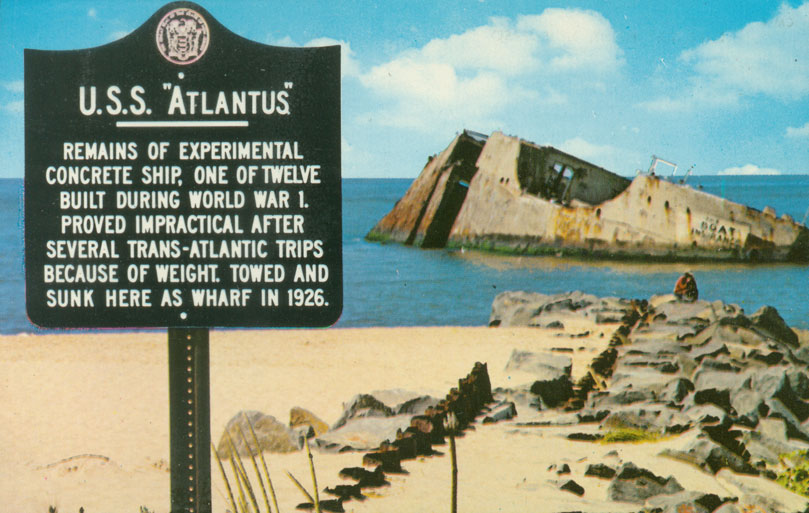
The 3rd concrete ship, the SS Atlantus was built by the Liberty Ship Building Company in Brunswick, Georgia and launched on December 5, 1918 and was the second concrete ship constructed in the World War I Emergency Fleet.

The war had ended a month earlier, but the Atlantus was used to transport American troops back home from Europe and also to transport coal in New England. In 1920, the ship was retired to a salvage yard in Virginia.

In 1926, the Atlantus was purchased by Colonel Jesse Rosenfeld to be used as ferry dock in Cape May, New Jersey for a proposed ferry between Cape May and Cape Henlopen, DE. The plan was to dig a channel into to the shore where the Atlantus would be placed. Two other concrete ships would be purchased to form a Y-shape where the ferry would dock.

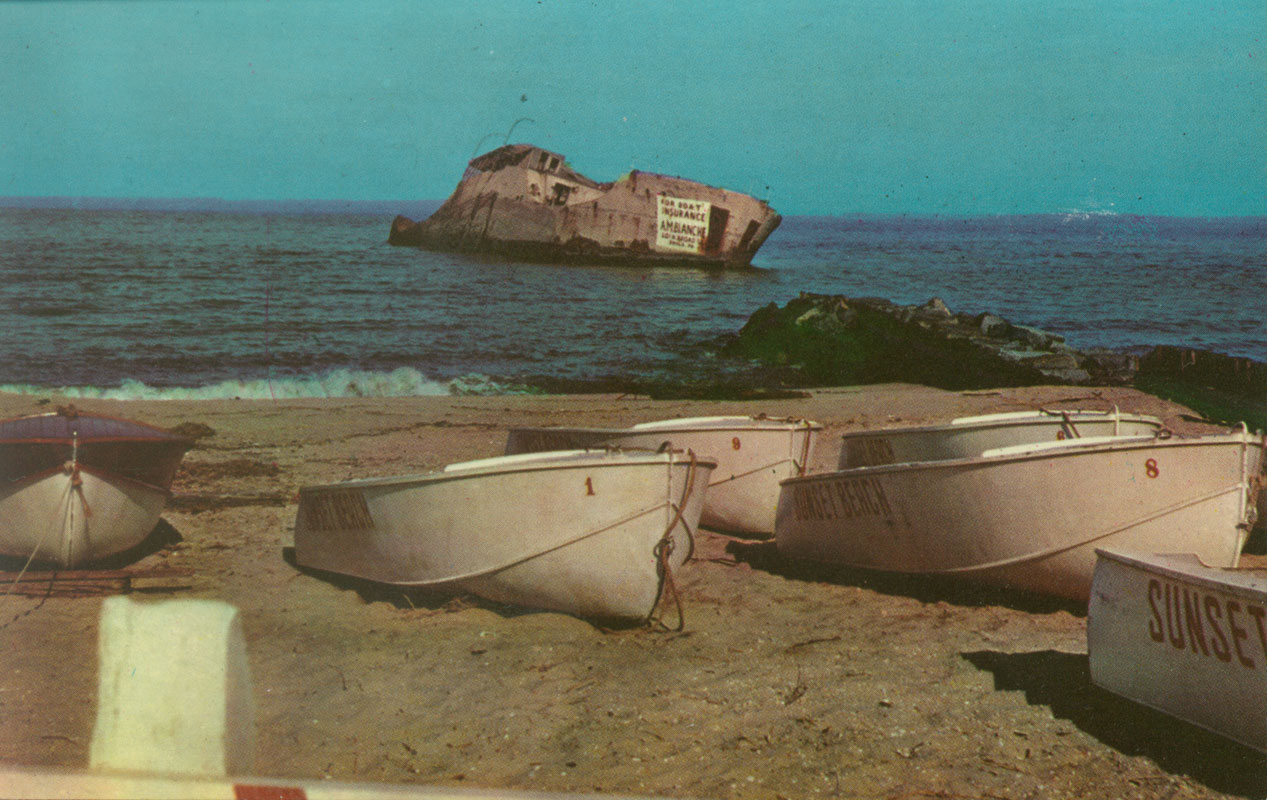
In March 1926, the groundbreaking ceremonies were held for the construction of the ferry dock. The Atlantus was repaired and towed to Cape May. On June 8th, a storm hit and the ship broke free of her moorings and ran aground 150 feet off the coast of Sunset Beach. Several attempts were made to free the ship, but none were successful.

Since then the Atlantus has become a tourist attraction seen by millions. People used to swim out to the ship and dive off, until one young man drowned. At one time, a billboard was also placed on the ship. Starting in the late 50's, the ship began to split apart in the midsection.

The S. S. Atlantus can be seen at Sunset Beach in Cape May, NJ.  As with the SS Palo Alto, unfortunately the ocean has taken its toll on the ship and she has broken apart. It's only a matter of time before the last of her remains crumble beneath the waves.

[Ref: (1) http://concreteships.org/ships/


 I hope you enjoyed this little bit of maritime history.

Til next time,
Meggi

Sunday, January 24, 2016

Point Bonita Lighthouse


Point Bonita Lighthouse – After the Rain Stopped


The wind was blowing hard and it had rained on and off – but the hourly weather forecast indicated a mostly dry afternoon later on, so I ventured out north to explore a not so well known lighthouse on the Western tip of San Francisco Bay.  On my way to Marine County, I had the windshield wipers going intermittently, the wind was hauling when crossing the Golden Gate Bridge and questioned myself whether my plans were foolish?  But nothing ventured, nothing gained – and so I drove on.  As I was parking at Battery Alexander in the Golden Gate National Recreation area close to Point Bonita, another squall came through and I quickly went back into the car to stay dry.  After the rain stopped and bundled up in a heavy rain jacket and wool hat against the wind, I grabbed my camera bag and tripod and ventured out.

Point Bonita is a narrow promontory on the western tip of the Marine Headlands, and is part of the largest urban national park in the United States, the Golden Gate National Recreation Area.  A secret jewel of the Bay Area, the Point Bonita Lighthouse, built in 1855, was the third lighthouse built on the West Coast and help shepherd ships through the treacherous Golden Gate straights.  The waters are treacherous and many ships did not survive the stormy waters.  The small museum at the lighthouse shows a map of around 15 that went down in the 19th century.


Today, the lighthouse is still active and is maintained by the U.S. Coast Guard.  The National Park Service provides access to visitors.  Point Bonita Lighthouse is reached by a half mile trail that is very steep in parts and leads through a tunnel and over a bridge to gain access to the small lighthouse, built on a very narrow rocky outcrop. 


Most impressively, the gale winds were whipping up the ocean, forcing me to hold on to, and steady my tripod as I was capturing the boiling waves below.  

As photographer I know that the time after a storm can be rewarding with beautiful cloud formations in the sky.  And I was not disappointed as the sky varied form minute to minute with occasional sun peaking through.  

I often say, there is no bad weather when properly prepared.  My multi-layers kept me warm and dry, and the weather provided beautiful photos that I am sharing with all of you here.


The Lighthouse Promontory breaking the Waves

View to the Northern Coast


Boiling Sea

Bridge to the Lighthouse


More Rain to the North


One last look at the lighthouse with the the Cliff House and Seal Rock on the far side of the San Francisco channel int he mist.

My further exploration of some of the World War II structures will be the topic of my next story. This last image of the lighthouse was captured from Battery Alexander, one of the many batteries sitting high on the Marine Headland, built for the protection of the entry of San Francisco Bay.

For now,
and til next time,
Meggi


Thursday, September 3, 2015

Pacifica


Beautiful California Coast

Capturing the changing mood over the ocean as night falls.

A salute to my friends and readers:  I have been traveling in the North, Alaska and Canada, quite extensively during the summer and my blog has been quiet.  I want to thank you for your continued interest, and your supportive feedback.  While I brought back many images, coming back from travel I always look forward to revisiting my favorite places here in California:  the mountains with Lake Tahoe and Yosemite Park, the coast with its rugged cliffs and beautiful sunsets.  During the summer the coast is often shrouded in the marine layer fog, so when the evenings are clear and the stars come out, it can be special.  I was hoping for those special clear nights as I went to Pacifica and its old pier several evenings – alas, it did not happen but even with clouds  and mighty winds, these trips were worthwhile and I want to share the images with you.


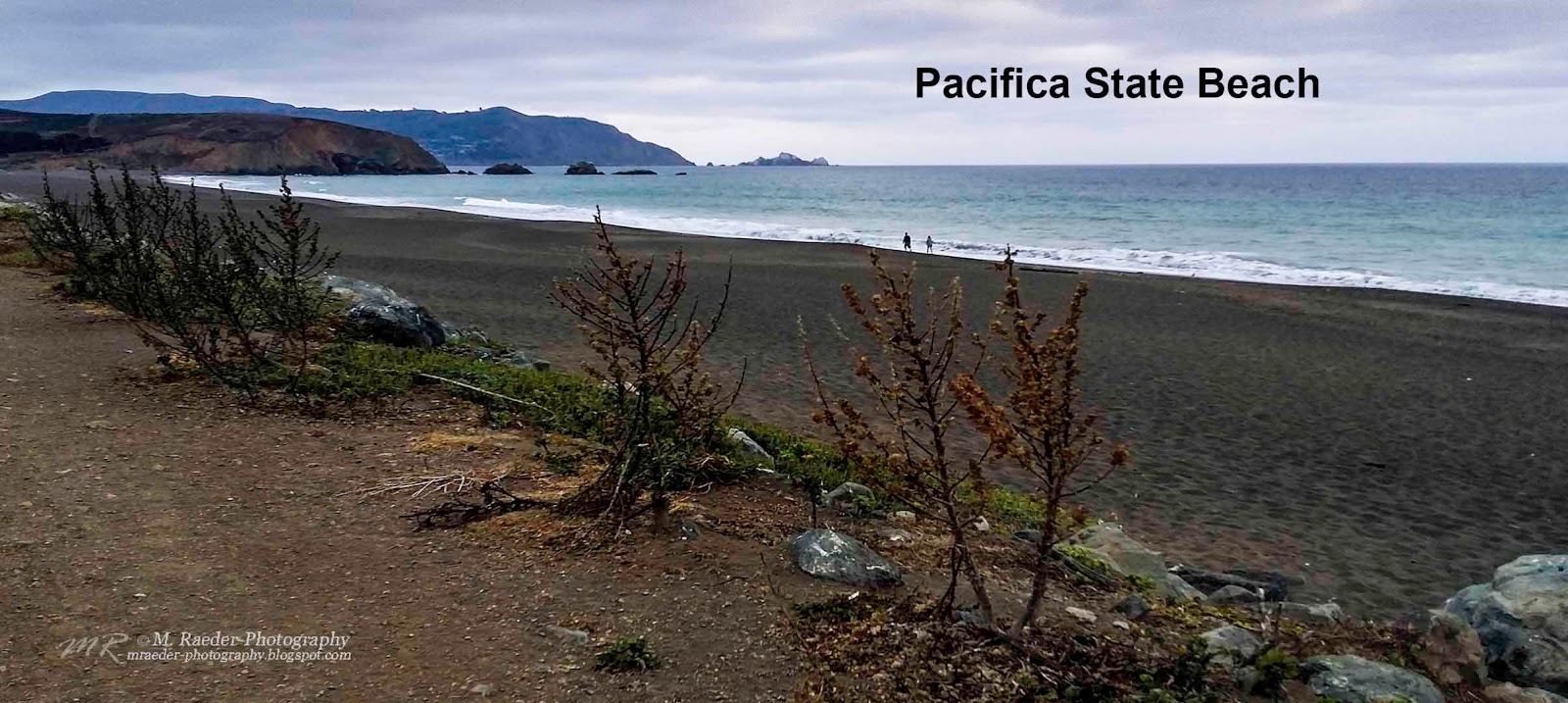
Pacifica is a small coastal community a bit south of San Francisco.  The ocean front is a State Beach and is graced by an old pier where the local fishermen cast their fishing poles to catch the evening dinner.  The southern end of the beach butts against a rocky outcrop so typical for he California coastline.


Late afternoon along the beach, you will find many people walking their dogs on the coastal trail where windswept trees adapted to the fierce winter storms reaching away from the water and stretching their limbs to the calmer meadows in the adjacent marsh land.


At the southern end of the beach are remnants of an old hotel where fishermen found refuge from storms a century ago.  Now, only a few walls are still standing graced with colorful graffiti.


As sunset nears, I hustle back to the pier to see the sun dipping beyond the horizon and it appears that for a moment the world is at peace.  The dog walkers stop and join me in gazing out to the ocean, with their dogs sit quietly at their feet as the ocean waves sing their eternal song.


Each trip to the pier offers different moods, different light, different clouds in the sky.  Flocks of birds appear out of nowhere on their way to their nesting ground.  


As the light drops it is quiet here on the pier.  Pacifica is a small coastal community and people I have talked to like their sleepy town.
After sunset, the hazy ‘marine layer’ or fog often creeps from the west often covering the town in a misty shroud. 


At other times, angry clouds roll in, and the sky colors in the afterglow of the disappearing light.


As night falls, the lights on the pier reflect on the waves below. The fishermen take their catch home, and the waterfront soon will be deserted.


The occasional walker often wonders why I am still here with my camera on the tripod and I welcome their stopping by and wondering what I am still capturing with the light gone.   I invite them to see the images appearing the back of my camera.  


Each evening on the pier is unique and I never tire of capturing the different mood over the Pacific Ocean.

Although I came for starry nights, I am happy to capture the ever changing clouds and moods offered by the ever changing ocean and sky.

Til next time,
Meggi


Tuesday, June 4, 2013

Night over Bixby Bridge

Star Trails over Bixby Bridge
 - and Photo Tips

Bixby Bridge on Highway 1, CA, USA

In the summer, the California coast is typically foggy at the end of the day and catching the night sky this time of the year is a rare treat.  But the weather forecast predicted an inversion when the warm air mass from the inland areas pushes towards the coast keeping the fog at bay.


On May 31, the forecast was for such an off-shore wind with the promise of a clear night at the coast.  So, I packed my gear and headed out to photograph the historic Bixby Bridge at night.  The bridge offers a well worth daytime destination and even on a Friday afternoon, many cars stopped, people jumped out, took some photos and headed on to whatever their final destination was.

California Coast

I had come early to explore the surroundings by daylight since photographing the bridge towards the water and southern sky required getting off Highway 1 and heading for the hills on a dirt road.  I walked up with my small camera taking images along the way to see which spot offered the best vintage point.

Bixby Bridge

Then I enjoyed sunset over the ocean sitting back to wait for the stars to come out.  A bit of haze covered the ocean but the sky overhead seemed fairly clear.

Early Evening haze

Sunset over the Ocean


I have learned that when setting up for a night shoot it is always good to get to the favorite spot before darkness.  So I drove up to “my spot” only to find 2 other cars and 5 guys rearing up to jump from the bridge – yes, you read correctly, these young men planned to jump with parashoots from the bridge and they did!  All of this happened so fast that I only couldn’t get a shot as they vanished into the void beneath. I am not sure about the heights of the bridge but it is a long way down [280ft / 85m according to Wikipedia] About ½ hour later they had climbed up the gulch to their cars and after much laughter they were heading for Santa Cruz for a Friday night party on the beach.

As I was setting up my tripod, checking the setting of my camera for the star trails, a highway trooper pulled up next to my car asking me about ‘bridge jumpers’.  How did he know?  The happy guys were long gone?  He said they were always concerned for the safety of the jumpers and after a quick thinking on how to respond, I assured him that the guys were healthy and happy as they left.

The Blue Hour
Camera settings during the ‘blue hour’ right after sunset:   f/2.8;  1 second, ISO 400; lens at 17mm.

As night fell, this unusual clear evening proved to be the rare treat I had hoped for.

With sunset pretty late, I had to wait until after 9pm for the stars to come out but what a great night it was.  Not much wind and mild temperatures - however, experience has taught me never to leave my house without my trusted down jacket, hat and gloves, and a thermos of hot tea!

Once the stars were out, I let the camera do its job for the next hour+ and record the stars.  Even with the haze increasing the stars still sparkles in the sky and I let the calm of the night envelop me.

Star Trails over Bixby Bridge [looking south with the rotation around the Southern Cross]

2 hours later, this is my last images of the evening with millions of stars overhead.  And a ghostly glow from the cars as they rounded the next hillside.  

Midnight over the Ocean
Camera Settings:  f/2.8;  30 sec,  ISO 2000, lens at 17mm  (a bit of lightening in post-processing)

Driving home way after midnight, I couldn’t wait to see what my camera captured and voila – I am sharing it with all of you.

If you are inspired, go out at night and see how beautiful the night sky can be outside the city lights.  Please also watch for upcoming Photo Workshops on my Photo Workshop link and enjoy the Photo tips below.

Til next time,
Meggi.


Photo Tips:

Over the past 2 year I have learned a lot for some great night photographers, astro-photographers, astrolandscapephotographers, and others that love the night and I am thankful to Steven Christenson, Star Circle Academy, and Jon Fuller, Moab Photo Tours, for their insight and help.  For those who have never ventured out under the “dark sky” - not city sky – here are some tips to make beautiful night images:

  1. A sturdy tripod is a must;
  2. A DSRL that can be set to manual focus and to manual exposure since the ‘automatic’ settings are completely fooled at night.
  3. A cable release since any camera shake will blur your image with long exposure.
  4. Loaded batteries and extra batteries.  Memory cards.
  5. Any lens can capture the night but for the night sky, a wide angle lens is best to capture as much in your view finder as possible and still be able to compose with some landscape into the frame to make the image more interesting.
  6. Exposure:  to capture as much of the little light available, expose with a wide open lens at f/4 or wider.
  7. Shutter speed:  Due the earth rotation, the stars seem to move and thus an exposure above 30 seconds will give oval stars.  Thus, my shutter speed will be between 20-30 sec for capturing the night sky (star points).
  8. Due to the improved sensitivity of the newer DSLRs, the ISO can be set high, e.g. between 1600-3200, to allow enough light to be recorded for a starry night sky image.
  9. In camera noise reduction:  set to off! Specifically for star trails since the camera would take another ‘dark’ image for the same length of time, e.g. 20-30 second, during which no recording takes place when shooting continuously.
  10. To preserve battery power, turn off the ‘image review’ function.
  11. The last images above was taken at around midnight at the following settings:  :  f/2.8;  30 sec,  ISO 2000 (a bit of lightening in post-processing)


Saturday, June 2, 2012

Chasing the Moon


Celestial Events – Chasing the Huge Full  Moon


Full Moon over Golden Gate

In a couple of my recent Travel TidBits blogs I wrote about the annular solar eclipse on May 20, 2012 and about the super full moon rising on May 5, 2012.  I actually photographed another ‘huge’ full moon setting on the early mornings of April 6 and April 7. On those days, the moon had similar characteristics with a near earth  orbit as described in my May 5 post.  The moon only 'appears' to be ‘huge’ due to the proximity to the earth.

I have only recently started to pay attention to these celestial events but find it fascinating.  Probably a lot of us go through life without ever paying much attention to the sky specifically if you are not an outgoing night person – well I did not feel I missed anything….  But thanks to The Bay Area Night Photography Meet-up group and the Star Circle Academy, I am all of a sudden more intrigued by what’s happening in the sky and willing to stay up or even go out at an ungodly time of 3-4am to watch – not to haul with –the moon.  So this is what I did on April 6: 


It was full moon and the moon was unusually large to its near earth orbit.  It’s a complicated story how to figure out where the moon might be either rising or setting over a landmark to capture an alluring image.  But thanks to Steven Christenson of the Star Circle Academy, I knew that looking west from the Berkeley Marina the moon would set over the Golden Gate Bridge.  With the bridge about 8-10 miles away, the perspective would be such that the moon would appear large relative to the bridge.  But this also meant that a large tele lens would be necessary to capture the setting moon and bridge in that far distance.  For this shoot, I choose the Nikon D7000 camera with the cropped sensor (aiding in the further reach), Nikon 200-400mm lens at full tele, and added a 1.4 teleconverter.  This gave me an effective 825mm tele - allowing for the relative close-up considering the 8-10 miles of distance between the Berkeley Marina and the golden Gate.  The images shown here were taken at ISO 200 with the an aperture of f/7.1 and a shutter speed varying between 3-5 seconds.

Well, armed with all my equipment and tripod and bundled in down jackets and hats and gloves, my friend Lynda and I set out at ~4am on a cold morning of April 6.  By the time we reached the Berkeley Marina a lot of photographers had gathered there to observe and capture the huge moon.  It was good to be early, to select the best place and set up our equipment, and follow the moon on his descend.  As it neared the bridge, the clicking of the cameras was the only sound to be heard.  Everyone as concentrating on settings, eager not to miss the shot since the moon waits for no one.


It was a great experience and finally over a hot cup of coffee, we talked about other possibilities to capture the ‘huge’ moon.  

Well, next morning at 4am, I was on my way to the coast and hoped to photograph the setting moon over Pigeon Point.  It was a clear morning along the coast with only a cloud bank far out over the ocean.  As I set up in the dark – thanks for a camping headlamp well equipped to see what I was doing - the moon was still high in the sky on its path beyond the horizon.  … and then I noticed it that my position would not bring the lighthouse into the path – oh well, too late to change [I hadn't done the complicated calculation .... mentioned above!!] .  But look for yourself, I still had a nice view over the calm ocean, and the morning colors just before sunrise were definitely worth the early trip out to the coast.

The setting full moon over Pigeon Point


Til next time,
Meggi


~~~~~~~~~~~~~~~~~~~~~~~~~~~~~~~~~~~~~~~~~~~~~~


Looking for some fun photography outings, check this out: