Showing posts with label Arctic. Show all posts

Wednesday, December 9, 2015

Polar Bears-Navigation

How do Polar Bears find their way?


Searching not wandering 

Polar bears range over vast areas of the Arctic sea ice, traveling through the polar bear night and across drifting pack ice seemingly without difficulty. While there is still much we don’t know about polar bears, it’s clear they must actively navigate their ever-changing habitat.
For example, polar bears demonstrate general fidelity to a given geographic region: a bear born on the Hudson Bay coast will likely spend its life navigating the seasonal sea ice of that region. Further, the search for essential resources—food and mates—is a key driver of polar bear movements. For females, another important reason for traveling is to find a suitable den location when pregnant—a supremely important aspect of the polar bear’s life cycle.
Now consider the challenges that come with navigating over vast areas of the Arctic sea ice in search of essential resources: few (if any) landmarks, extreme weather, months of darkness (and months of brightness!), and, perhaps most important, the ever-dynamic sea ice that is constantly moving and changing beneath their feet. Sound challenging? It certainly does to me! So how do polar bears do it?

Polar bear senses

While we don’t know precisely how polar bears navigate over large areas and in seasonally appropriate ways, we do have some understanding of how they may use their senses to gain information from their environment as to their whereabouts, and the whereabouts of the resources they seek. A keen sense of smell is essential for tracking and assessing the "identity" of potential mates; and it may be equally advantageous for avoiding other, potentially aggressive polar bears. The keen sense of smell is also an essential "tool" polar bears can use to locate a snow lair holding a tasty and important seal meal. Polar bears also have good hearing, and this may aid them in determining whether a seal lair is occupied or not.
When navigating over longer distances and in accordance with more seasonal movements, the sense of smell may also provide bears in some regions with information regarding their proximity to land. This can be of great importance to polar bears living in the seasonal sea ice ecosystems or in the high Arctic archipelagos, where land holds important denning habitat and the refugiarequired when the sea ice diminishes during the summer months.

Cycles of darkness and light

During the winter months, darkness prevails, and during the summer months, the days are long and bright with sunlight that reflects off the white snow and sea ice. How good is polar bear vision and how is it adapted to these extremes? The truth is we don’t know. Certainly, polar bears use their vision to assess the landscape and resources they seek, but how they adjust to the dramatic changes in light has not yet been determined.

The dynamic sea ice

The sea ice is constantly moving in both "predictable" and unpredictable ways. Imagine trying to get from point A to point B, when the "ground" beneath your feet is moving to point C! This dynamic sea ice provides a prominent environmental challenge that polar bears face when navigating their environment. 
While we don’t know for sure how polar bears account for this dynamic movement, research has shown that they don’t let the drift of the sea ice tell them where to go. Polar bears sense, somehow, the movements of the sea ice, and adjust their movements accordingly. 
Generally speaking, this type of "dead reckoning" is broadly found in animals, but we know little about the physiological mechanisms that make it possible (though it is likely that the vestibular organs of the inner ear are involved—acting like an accelerometer—along with cognitive processing, which taps into learning and memory). And while many animals can sense the earth’s magnetic field, providing important information on location, magnetic way-finding becomes less and less informative as one approaches the magnetic North Pole.

Climate change is making the sea ice more dynamic

Clearly, the natural challenges of navigating the Arctic sea ice are numerous, but polar bears are uniquely adapted to this lifestyle, and thrive amidst the many natural challenges that come along with life on the dynamic, ever-moving, sea ice.
However, sea ice losses driven by an unprecedented increase in greenhouse gas emissions, are increasing the dynamism of the sea ice, as the ocean’s currents, waves, and wind hold a greater influence on sea ice stability.
While polar bears have evolved over evolutionary time (thousands and thousands and thousands of years!) to meet the challenges of their extreme environment, the rapid transformation of the Arctic sea ice will reduce the polar bear’s capacity to successfully navigate the vast expanses of their range. It’s up to all of us to make sure that the polar bear can navigate the vast Arctic, always. 

Written by Megan Owe, December 7. 2015
Image copyright 2015 M. Raeder-Photography

Til next time,
Meggi

Sunday, November 29, 2015

Shell Oil and the Arctic

How People like You Save the Arctic!

For 3.5 years, people like All of Us campaigned to stop oil giant Shell from drilling in Arctic waters. 


 Mother and cub [Copyright M. Raeder-Photography]


Finally, this year, after relentless work by many environmental organizations, Shell announced that it is ending its Arctic drilling plans!

It's been an amazing year in the fight to save the Arctic — and it's because of your action. From kayaktivist flotillas in Seattle to bridge climbers in Portland to the millions of people who signed petitions, wrote letters and called the White House, this was a victory fueled by people power. Watch the story unfold in the video below!


Peter Capaldi narrates the story of how All of Us won this monumental victory for the Arctic.


[Ref: Video by GreenPeace]


Til next time,
Meggi


                                           Mother and 2 cubs [Copyright M. Raeder-Photography]

Monday, January 26, 2015

Warming Arctic


Little Auks Adapt to Warming Arctic

Last month I gave you a little glimpse into my experience traveling to the Antarctic.
Today, I would like to take you to the opposite pole, to the Arctic, and share some recent findings by researchers who studied the Little Auk, a small black and white bird that is a so-called sentinel species, one that can be used as a proxy for the health of an entire ecosystem, much like the polar bear.  It is a fascinating story and video involving the migration of southern krill to the northern waters as the ocean waters warm and the glaciers melt.

So by studying this little bird, that looks kind of like a flying penguin, scientists are rethinking how polar ecosystems are changing in our warming world.


Little Auks [Copyright Hopkins]

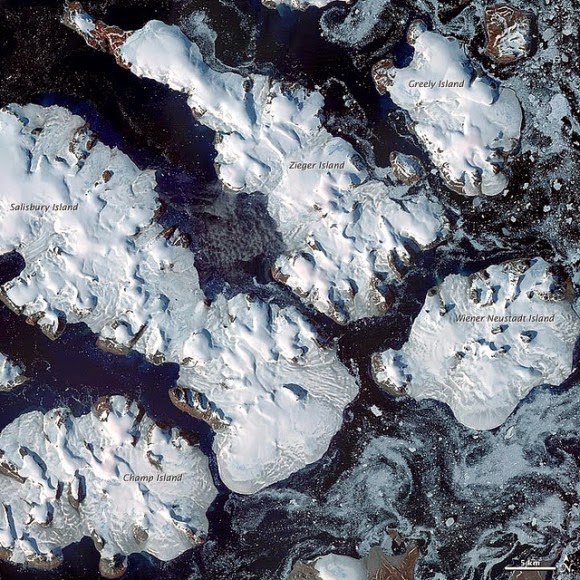
In July of 2013, a team of scientists from France, Russia and the United States descended upon an uninhabited archipelago in the Russian Arctic called Franz-Josef Land, the northern most archipelago in the world. There they spent two months at Tikhaya Bay on Hooker Island, one of the archipelago’s 191 islands, tagging and studying a small black and white seabird called the little auk (Alle Alle), which nests on cliffs and dives for its dinner in the frigid water.

Their findings call into question some models of climate change impacts on polar ecosystems, argues David Grémillet, the lead scientist of the group, in research published in Global Change Biology in mid-January.

Given its remote high-Arctic location, Franz-Josef Land has long been considered a kind of Arctic Eden, sheltered from the impacts of climate change. Nearly 85 percent of its land mass is blanketed by glaciers and its islands are surrounded by extensive sea ice. But temperatures in the Arctic are rising, and are predicted to increase by as much as 14 degrees Fahrenheit by the end of the century. Grémillet and his colleagues wanted to measure how the ecosystem of this icy Arcadia is responding.


Little Auks in Franz-Joseph Land [Copyright Cory Richards]

They chose the little auk as a subject because it is a so-called sentinel species, one that can be used as a proxy for the health of an entire ecosystem, much like the polar bear. The most abundant seabird in the Atlantic Arctic, with over 40 million individuals, the little auk is a major part of the food chain in polar ecosystems. Previous research has suggested that the little auk is quite flexible in the face of changes to its environment. But Grémillet and his colleagues suspected the bird might reach a breaking point due to its high energy costs and metabolic rate, as well as a diet primarily made up of copepods—tiny crustaceans that are themselves highly reactive to changes in sea ice and water temperature.


Using remote sensing data, the scientists measured changes in the volume and area of sea ice and glaciers between 1979 and 2013. They also tagged a number of little auks from one colony with tiny electronic devices affixed to legs or breast feathers to track their foraging behavior. These devices, called miniaturized temperature–depth recorders, provided information on the depth and duration of every dive, as well as the hours spent each day gathering food. The researchers then compared current and historical data on the diet, body weight and chick growth of little auks at Franz-Josef Land.
The data they collected revealed some bad news and some good news. The bad news: Sea ice in the Franz-Josef archipelago has, in fact, retreated markedly during the last decade, disappearing entirely during summer by 2005—a harbinger of future conditions elsewhere in the Arctic Ocean. Coastal glaciers have also retreated, dumping large volumes of meltwater into the sea. The good news: while disappearing sea ice curtailed the birds’ traditional feeding grounds, retreating glaciers created new ones. The little auks were able to adapt, feeding at the boundaries where glacier melt discharged into coastal waters at Tikhaya Bay, close to the their breeding areas. Local zooplankton were shocked by cold temperatures and dramatic contrasts in salt concentrations between the fresh meltwater and saline oceans, making them easy prey. The little auks were able to maintain chick growth weights, while adults lost just 4% of body mass.

Frozen Franz-Joseph Land, August 2011 [Copyright NASA Earth Observatory]
The little auks’ adaptability in Franz-Josef raises questions about previous research on the birds. In a 2010 paper, Nina Karnovsky of Pomona College predicted that 40% of all little auks would disappear from the Atlantic Arctic by the end of the 21st century, Grémillet and his colleagues note. They argue that this prediction must now be revisited. They also call for further study of little auks at other Arctic geographies, to see if they are as adaptable as the ones making a home at Franz-Josef Land.
The Franz-Josef little auk findings support the conclusions of other recent research on Adélie penguins in the Antarctic and seabirds and marine mammals in Alaska that suggest glacial melt can, in some cases, compensate for disappearing sea ice to support new feeding habits, benefitting certain animals within an ecosystem, according to the authors of the paper.
“There is currently a huge demand for predicting the fate of Arctic biodiversity exposed to ongoing climate change,” the authors write. “At the species level, this is achieved by building habitat models.” But if the models don’t take certain environmental interactions into account, inaccurate predictions will be made.
This article is republished by EarthSky.org [with permission from GlacierHub. This post was written by Kristen French.]
 
Til next time,
Meggi
 

Thursday, January 10, 2013

Arctic Drilling

Please take action and speak out against Arctic Drilling.
The recent examples of near mishaps are warning signs 
that should not be ignored.


Another Reminder of the Dangers of Arctic Drilling -- Take Action
From:  http://www.biologicaldiversity.org/
Polar bearAs if we needed another reminder of the dangers of Arctic drilling: On New Year's Eve, Shell's drillship Kulluk broke from her towlines and ran aground in Alaska's Kodiak Bay, en route from the Arctic to Seattle. The rig, carrying about 150,000 gallons of fuel and lubricant, remained stranded in rough, treacherous waters for a week until it was finally pulled free and taken to safety.

The Obama administration on Tuesday rightly ordered a full review of all operations connected with Shell's Arctic project, which has been beset by mishaps over the past several months. But the larger lesson shouldn't be ignored: Drilling for oil in the Arctic, with its hurricane-force winds and forbidding ice, is fraught with massive risk. A spill would be nearly impossible to clean up, and many of the Arctic's wild animals, like polar bears and ice seals, are already struggling to survive in the face of a warming climate.

Read this Huffington Post op-ed by the Center for Biological Diversity's Miyoko Sakashita and then speak out against Arctic drilling.
~~~~~~~~~~~~~~~~~~~~~~~~~~~
The Huffington Post, January 2, 2013

Arctic Drilling Proves Dangerous Again

By Miyoko Sakashita

I couldn't help but wonder this week as Coast Guard crews braved Alaska's dangerous seas to regain control of Shell's drilling rig and evacuate its crew: Why is our federal government bending over backwards to let Shell drill for oil in the Arctic Ocean?

This week's incident with the Kulluk in the Gulf of Alaska was yet another frightening reminder of just how unruly Alaskan waters can be. Even farther north it's not unusual for the Arctic's ice-choked waters to have 20- to 30-foot swells, pervasive fog and sudden storms. These waters can never be made safe for oil drilling. The conditions are dangerous and risky, and an oil spill in the Arctic would be devastating. Not only are people at risk but the Arctic Ocean is also home to polar bears, whales and rich biological diversity that would be destroyed along with the Native Alaskan communities that depend on the ocean for their subsistence.

Although the Obama administration has approved Shell's drilling plans, it seems pretty clear they're not ready to handle the harsh Arctic environment. The Kulluk breaking free from its tow lines the other day is just the most recent in a series of Arctic drilling follies. In July 2012 Shell's other drilling rig, the Noble Discoverer, slipped its anchor and nearly ran aground in Alaska's Dutch Harbor. And in a separate incident, during testing, Shell's oil spill response vessel dropped its containment dome, which crushed it like a beer can. Shell has also had difficulty meeting standards for its oil spill response vessel, its air permits and its drill rig.

Despite failing to prove readiness for Arctic drilling, the Obama administration has practically ushered Shell into the Arctic as part of the president's "all of the above" strategy -- even on the heels of the catastrophic BP oil spill in the Gulf of Mexico.

Drilling for oil in the Arctic Ocean can never be made safe -- that much was made abundantly clear with the incident with the Kulluk -- and we should leave well enough alone. The Far North is one of the last remaining, truly wild places on Earth, too untamed to be industrialized, too precious and fragile to risk catastrophe.

We all have just one voice, but together we have influence and can be heard.
Please sign the Center of BioDiversity Petition.

Til next time,
Meggi