Tuesday, October 4, 2011

Photo Tips: Ants in my Viewfinder


Lens Review:
AF-S NIKKOR 28-300mm f/3.5-5.6G ED VR (FX) Lens


In less than a week, my friend Lynda and I are embarking on our next trip.  We have traveled and photographed polar bears in Northern Canada, went on safari in Kenya and have marveled at cheetahs running from 0 to 60 miles an hours in several seconds.  In our upcoming trip, we are focusing on cultural photography in India, Bhutan and Thailand.  The age-old question is of course what photo equipment to take specifically when being on the road and in a different hotel every night – being prepared for every situation and yet not to be over burdened by a heavy pack, tripod and all.  On top, for our 6+ week travel we each contemplated the necessity of taking 2 bodies, one with a DX and the other FX sensor format.  Lynda had been photographing with the Nikkor 18-200mm Dx lens, a very nice overall range and a preferred lens for many travel photographers.  However, after using more serious top-end pro-lenses like the 70-200mm lens recently, this all around lens while giving nice images tends by comparison to be a bit soft.

Then earlier this year, Nikon came out with the new AF-S NIKKOR 28-300mm f/3.5-5.6G ED VR lens.  So before the impending trip, Lynda took stock of her lenses and decided to buy this new lens and ‘test drive’ extensively and compare it to four other lenses (see list below).  Having been an analytical research scientist all her life, she put her scientific hat on and developed a testing matrix taking every thinkable variable into account and then meticulously tested and compared results under the proverbial microscope.

Having seen the results, I wanted to share her assessment of several lenses specifically with respect to sharpness and thus, invited her to write a guest lens review for my Travel TidBits blog and today, here it is!

I won’t steal the thunder and won’t reveal her overall results.  It was an interesting experiment and I want to applaud her for her thoroughness.  So please read on….


   Lens Review by Lynda Sanders

Well, in preparing for an extended trip to lands afar (India, Bhutan and Thailand) I wanted to review and update my equipment with an eye to size, weight and image quality.  And versatility - why take two lenses if one will do, since we will be doing some serious hiking, and my feet get sore these days.

Some years ago I purchased my Nikon D300 body (before even the D300S was available) with, as was quoted to me at the time 'the only lens I would ever need', the AF-S DX NIKKOR 18-200mm f/3.5-5.6G ED VR.  I took that equipment to Myanmar (Burma) and shot exclusively with it, and was thrilled with the results. (http://www.pbase.com/lyndasanders/burma).  I thought I was set for life.

Then, more recently, I went to a butterfly exhibit in the San Diego Wild Animal Park (highly recommended, once a year in April) and armed with a Tamron 1.4x converter, got some shots that still needed serious cropping, such as a butterfly's soccer ball-design compound eye.  When I compared my images with those of companions who had different lenses, I developed a suspicion that my beloved 18-200mm was not as sharp at the extremes as it might be when challenged with a tough situation.

I have since moved on and upward, and acquired a D700 body (full frame sensor vs the 2/3 sensor of the D300) and other lenses.  Life was good.  Then, the AF-S NIKKOR 28-300mm f/3.5-5.6G ED VR (FX) lens was released.  This of course gives almost exactly the same range as the 18 -200 on the smaller DX sensor.  With a big trip ahead, the question was, should I get this 28-300mm lens for my D700?  Is it just a bigger, heavier version of the 18-200mm but marketed to the FX people?  It has a great range, but, key point, it does not have a constant aperture over its zoom range, putting it in a 'less than fantastic' category.  What to do?

For me, there was only one option - buy one and test it against other lenses, owned and borrowed, and see how it looked.

These are the Nikkor lenses tested on the Nikon D300 or D700 body:

  • AF-S NIKKOR 28-300mm f/3.5-5.6G ED VR (FX)
  • AF-S DX NIKKOR 18-200mm f/3.5-5.6G ED VR (DX)
  • AF-S NIKKOR 70-200mm f/2.8G ED VR II (FX)
  • AF-S NIKKOR 24-120mm f/4G ED VR (FX).

As a scientist (in a previous life), and for those of you to whom this is meaningful, I designed an experimental matrix, changing only one variable at a time.  I used a few different lenses for comparison, including the amazing AF-S NIKKOR 70-200mm f/2.8G ED VR II (FX) which is my current favorite lens.


Experimental Matrix for Testing and comparison of Lenses
#
Camera body
Lens
(mm)
Focal Length (used)
35mm Equivalent
1
D300
18-200
80
120
2
D300
28-300
80
120
3
D700
28-300
120
120
4
D700
70-200
120
120
5
D700
24-120
120
120

ISO kept constant at 500, aperture priority at f 6.3
My test real-life object was a marching ant as seen in the banner at the top of this blog, and  focused right on the center of the ring of the eye facing you.


And - the results:

Sharpness of the 18-200mm vs the 28-300mm on the D300 body:


The eyes have it.
On the D300 (with a small size sensor) there is no doubt, the 28-300mm gives a sharper image than the 18-200mm.  Look at that eye-ring.  And the forked nose, even though it is probably just in front of the plane of focus.

How does this compare with a really great FX lens on the D700 body?


Not so much of a difference.  Bear in mind, this is a small crop of the originals to highlight differences.  The 70-200mm is a high-end lens, and the 28-300 gives it a good run for its money.  We begin to see pixelation before we see differences in sharpness, and that is as good as it gets.

And, what do we think of the 24-120mm lens by comparison?  This is a constant aperture F 4.0 mid-range, gorgeous zoom.  For someone wanting 'good glass' and not satisfied in principle with a variable-aperture zoom, this might be an alternative to the 28-300 for a general-purpose lens, but of course with a more limited range.  (Life is a series of trade-offs, have you noticed?)


Wow.  The 28-300mm stacks up pretty well against this lens too.  A small qualifier:  to maintain constant parameters, both shots were taken at 120mm, which is in the middle of the range (optimum for sharpness) for the 28-300mm but at the extreme of the range of the 24-120mm.  So maybe the comparison is not completely fair.  But, the 28-300mm still looks pretty darn good.

Another technical qualifier:  All lenses have specs (specifications) of a given range.  This means that each individual lens performs somewhere within this acceptable range, but lens-to-lens there will inevitably be small variations.  So, I can really only say that the particular lens I have performs as shown.  But, I would expect that other 28-300mm lenses would be closely similar.

Footnote:  I noticed that the focusing of the 28-300mm was just a tad slower and noisier than the 70-200mm (my reference for a really nice lens) and if you read other reviews, I can understand why some consider it not the best for wildlife photography, where you need the fastest focusing possible to track that bald eagle zipping by overhead.  But it's a lot better than other lenses I have tried (like the astoundingly slow-focusing older 80-400mm lens) and I'd judge it fine for all but a running cheetah.

So, at the end of my study of the ants, I am going to keep this 28-300mm lens and plan to use it as my workhorse lens for my upcoming trip.  I'll take some other lenses, like the 16-35mm F 4.0 and 50mm F 1.4  for when I'm seriously worried about sharpness.  And maybe I'll take an extender or two for further flexibility without much weight - there are pros and cons there, but I leave that discussion for another day.

Happy shooting!
Lynda Sanders


So, here you have it. 

Thank you, Lynda, for your thorough ‘test drive’ and for sharing your comparisons and results.  Since we will travel together, I am sure we will have lots of other discussions on equipment and compare Lynda’s ‘workhorse’, the 28-300mm lens, with my favorite, the 24-120mm lens, in our daily evening download and review.  I am sure in the end we will both bring back lots of great images and not to forget:

GREAT MEMORIES.

So, watch my Travel TidBits from the road through India and Bhutan!

Til next time,
Meggi


Tuesday, September 27, 2011

Fast Action Photography


Twenty years from now you will be more disappointed by the things 
you didn't do than by the ones you did do.
Explore. Dream. Discover.
~ Mark Twain~


Great Learning!

© M. Raeder-Photography

All through the summer, the large flock of hummingbirds in the Santa Cruz Mountains offered a great learning opportunity to fast speed photography.  These tiny birds can fly at 30 miles per hour and they flap their wings at a rate of 40-80 times per second.  They are ‘energy bundles” in a tiny package:  weighing approximately 1/10 of an ounce and yet on their migration they can fly non-stop across the Gulf of Mexico – a distance of 500+ miles!  Once they have reached their destination, they typically feed on nectar and obtain their protein from catching small insects.  They feed ~2/3 of their body weight in nectar which means they must feed about every 10 minutes during the day.  

© M. Raeder-Photography

There are over 300 species of hummingbirds and they are birds of the New World.  Their migration routes are as long and difficult as for most birds wintering in the warmer climates but migrating for the summer all the way up to Canada and Alaska.  Late spring and early summer, hummingbird females build a nest and typically lay 2 eggs.  They tend and feed their chicks with devotion which involves gathering food for the hungry chicks from sun-up to sun-down.  This summer, I was fortunate to observe a hummingbird nest for 6 weeks from the laying of the eggs to the hedging of the chicks – a fascinating journey (and subject to another story).


Competition at the feeder - 
© M. Raeder-Photography


Back to the Santa Cruz Mountains:  Although we see hummingbird in many places n California, the Santa Cruz Mountains must offer good food and habitat.  My friend Judy Bingman, a wildlife photographer (http://judybingmanphotography.blogspot.com/) has created an oasis for hummingbirds in her backyard of her secluded home in the mountains where 10+ feeders attract many hummingbirds all day long.  She has been planting native flowers that attract the birds with Mexican sage, honey suckle, Watsonia and other nectar producing flowers.  The low bushes and trees offer branches to perch and rest. 

© Judy Bingman Photography


Throughout the summer, we have invited students to come up to the mountains to enjoy Judy’s garden and to learn how to photograph these amazing birds.  Photographing fast objects requires some special considerations to craft beautiful images using “stop action” photography to capture a beautiful portrait.  Judy and I have teamed up to teach and help students mastering new techniques necessary for the hummingbirds.  Looking at the beautiful images our students achieved what they came for.  Below are the examples of what is possible during a day of observation and patience – both a must in wildlife photography - concentration, attention to light, exposure and shutter speed.

~~~~~~~~~~~~~~~~~~~~~~~~~~~~~~~~~~~~~~~~

Photo Tips:  For fast action - stop action photography, I typically start out with a setting of f7.1 and 1/1000 and dial the ISO up to gain proper exposure.  For the hummers, I use the longest tele lens that I have [Nikon 200-400mm] and add a tele extender Nikon 1.4.  When using a Nikon camera with a cropped sensor [Nikon D7000] this will yield an effective yield of ~800mm.  A sturdy tripod is a must to keep the equipment still.  Cable release is helpful.  Any small camera shake will result in blurring.

When capturing wildlife, it is also important to observe routines and patterns and to anticipate the action - this will greatly improve the capture of great wildlife images.

~~~~~~~~~~~~~~~~~~~~~~~~~~~~~~~~~~~~~~~~~~~~~

Dan practicing some macro photography
© Dan Houk Photography


© Dan Houk Photography

                                          Ellen focusing on a hummer


© Ellen Bateman

© Diane Finke


Steve concentrating on the birds

                                                        © Steven Tull


               Patcheree - taking the next shot.


Flying in  --  © Steven Tull

                                              © Ellen Bateman


© M. Raeder-Photography

Anna seemed to be undisturbed by having all of us in her yard!


© Diane Finke


And the hummingbirds are very used to Kelly strolling through the yard.


                             © Susanne Weissenberger  [http://whitemountainphotography.blogspot.com/]

Overall, this has been a great summer of exploring.  The hummingbirds were there in droves and offered a great learning opportunity for fast photography and every one was able to get lots of images taking home among them some really great shots!

I can't wait for the next spring to see the return of the hummers to Judy's garden.

Until next time,
Meggi

To see all of the workshops and photo travel opportunities 
offered by M. Raeder - Photography, please click here.


Tuesday, September 6, 2011

Travel TidBits: Dragonflies

Travel TidBits:  Dragonflies and solitary oaks on Blair Ranch

Coyote Hills

A couple of weeks ago I joined a group of hikers to search for dragonflies in the hills west of Coyote Valley.  Blair Ranch is a private property and was only accessible during this hike organized by the Santa Clara Open Space Authority and lead by 2 very knowledgeable naturalists.  Much was learned about Dragonflies and their lifecycle which is predominantly under water!

To the south, the thick marine layer brought moisture, enough for the oaks to stay green while the grass typical for this time of the year was all dried out.  Our hike brought us over a ridge to a small pond and soon we saw a myriad of dragonflies.


The meadow hawk - no this is not a bird - lurked in the dry grass and although observing with its big eyes it let me crawl quite close to capture it.


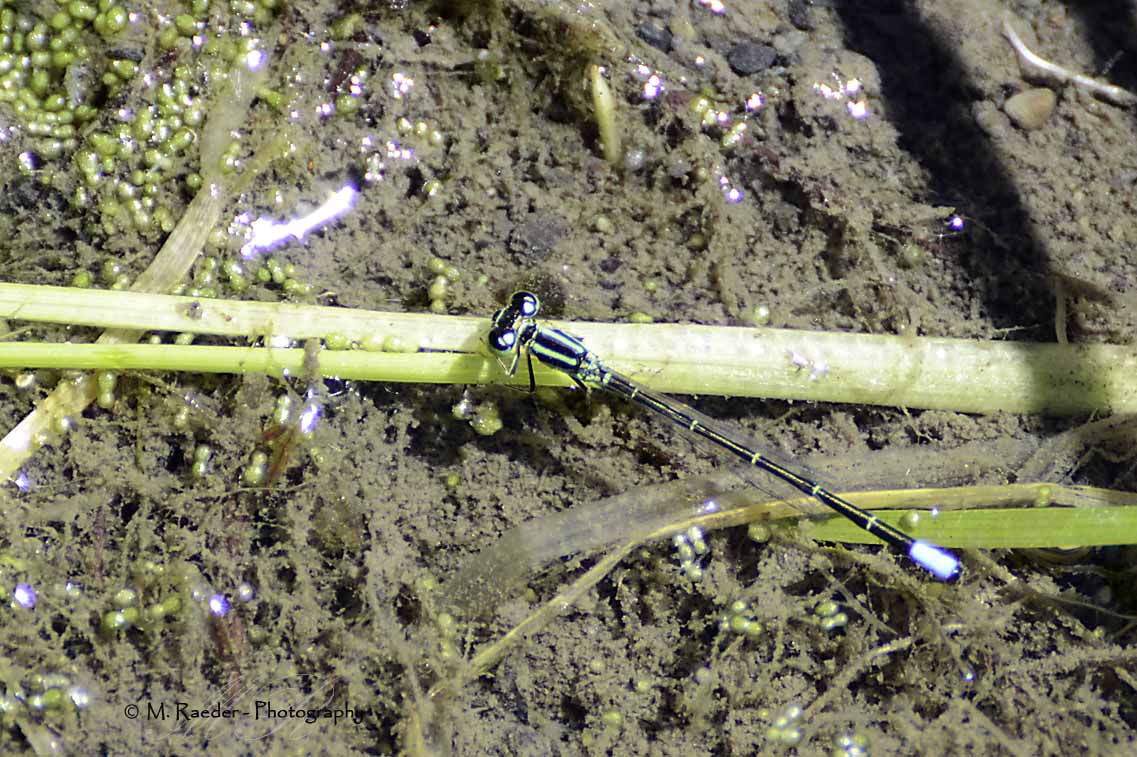
This blue beauty was found close to the pond sitting just for a second before taking off again.  We saw a Red-flame skimmer and the tiny common bluetail damselfly (below).


As we walked back the sun had broken through the cloud layer, we passed by this solitary oak capturing the essence of the California hills - standing tall struggling to stay alive in the hot summer sun by drawing the moisture from the frequent fog.  Gnarled but beautiful.


Til next time,
Meggi

Friday, August 19, 2011

Travel TidBits: Porcupine


Fable of the Porcupine 


Have you ever seen a baby porcupine? 


It was the coldest winter ever. Many animals died because of the cold. 
  
The porcupines, realizing the situation, decided to group together to keep warm. This way they covered and protected themselves; but the quills of each one wounded their closest companions. 
  
After awhile, they decided to distance themselves one from the other and they began to die, alone and frozen. So they had to make a choice: either accept the quills of their companions or disappear from the Earth. 
  
Wisely, they decided to go back to being together. They learned to live with the little wounds caused by the close relationship with their companions in order to receive the heat that came from the others. This way they were able to survive. 

The best relationship is not the one that brings together perfect people, but when each individual learns to live with the imperfections of others and can admire the other person's good qualities. 


The moral of the story is: 
Just learn to live with the Pricks in your life!


Til next time,
Meggi


Sunday, August 14, 2011

Travel TidBits: Penguins


Travel TidBits: Emperor Penguins


So many of us have seen the movie:  'The March of the Penguins' which is a beautiful documentary on the life of the penguins in Antarctica  following them through a year of playing in the water, making the long journey to their breeding grounds, the ice-cold winter taking care of the egg and then the triumph of the young surviving the harsh conditions.

It made me yearn to travel and see them in the wild.  Alas, long and expensive travel, the climate preventing most of us to see them with their young in the winter or staying for any prolonged time leaves us just dreaming about it.

I recently received this You Tube video from a friend and it is so beautiful that I want to share it.  Not only is the video well make but I love the music.


Just click on the link:


http://www.youtube.com/watch_popup?v=SkY03n0_sD8&vq=medium


and sit back and enjoy!


Til next time,
Meggi

Friday, August 12, 2011

Travel TidBits: Hot Air Balloons


Travel TidBits:  Reno Hot Air Balloon Festival

“For more than 29 years people from all over the world has chosen to spend a September weekend mornings at The Great Reno Balloon Race, taking in the spectacular sights and sounds of this unique event.  Balloonists come from all 50 United States, as well as internationally from Brazil, Germany, Japan, New Zealand, Sweden, Finland, Italy, Greece, England and Israel, to name a few.  This event will be colorful, amazing and will stay I your memory for a long time.


The nation’s largest free hot-air balloon festival, The Great Reno Balloon Race, will paint the sky again September 2011 at Rancho San Rafael Regional Park. What began with just 20 balloons in 1982 has grown to showcase more than 100+ balloons and pilots from as far away as New Zealand and Switzerland. On average, 140,000 spectators from all over the world come to share in the wonder of this three-day event. “


http://www.renoballoon.com/pdfs/2011/grbr_brochure_2011_final.pdf


This is how the organizers describe this event and I can only agree that the Reno Hot Air Balloon Festival is a feast for the eyes and for the camera.  Rising at 4am, seeing the Glow Balloons and the Dawn Patrol as they gracefully sail into the morning sky was so memorable in the first year that I have returned again and again and captured many great images.  For more of my images please visit my web gallery on the Reno Hot Air Balloon Festival and see the images from the early morning and Glow Balloons!  


This year I am offering a Photography Workshop during this weekend in Reno which includes to only 2 mornings at the Balloon Festival, but also a visit to Sand Harbor on Lake Tahoe and the exciting visit to the Animal Ark to see the cheetahs run - a fantastic opportunity to see these magnificent animals in action outside Africa.


But back to the balloon festival:

Even with a festival that big, spectators can wonder through the fields and between the balloon as they are being set up and the hot air from the blowers slowly fill the balloon until they are ready to carry the basket.  Witnessing 150 balloons raising to the sky and gently floating against the morning sky is fabulous.  And then the games start where the balloonists are racing to catch the hare, a pink balloon with big bunny ears.

And of course as with all events, there are crafts people and lots of good food for sale so no one needs to go hungry or without coffee after getting out of bed at an ungodly hour!  


And as the morning progresses to 10am, the show is over for the day since the mountain winds start to blow making navigation of so many balloons unsafe, only to do it again the next morning!  
So this leaves the spectators with a whole other day to enjoy Reno and its surroundings. 


My favorite spot for the day is at the Tahoe shores at Sand Harbor, a beautiful beach on Lake Tahoe.  A picnic and rest on the beach is rewarding after such an early morning!


Another must for me is the Animal Ark, a sanctuary outside Reno for animals who need a home.  Nestled in the desert area, the tiny turtle, the Siberian tiger, a mountain lion and fabulous sleek cheetahs all found sanctuary for life.  But there are also 2 young bears that are trained to hopefully be able of being released to the wild once they can care for themselves.


If you are intrigued, 
please check out my next Photography Workshop 
(September 9-12, 2011) held during this event at Reno 
plus an extra attraction of 


Please contact me at mraeder33@gmail.com  or call 650-326-4570


Up, Up and Away!